That 1:3 Risk-Reward Setup Looks Great on Paper — Here's Why It Might Be Destroying Your Account

The Forum Told You It Was a Great Setup
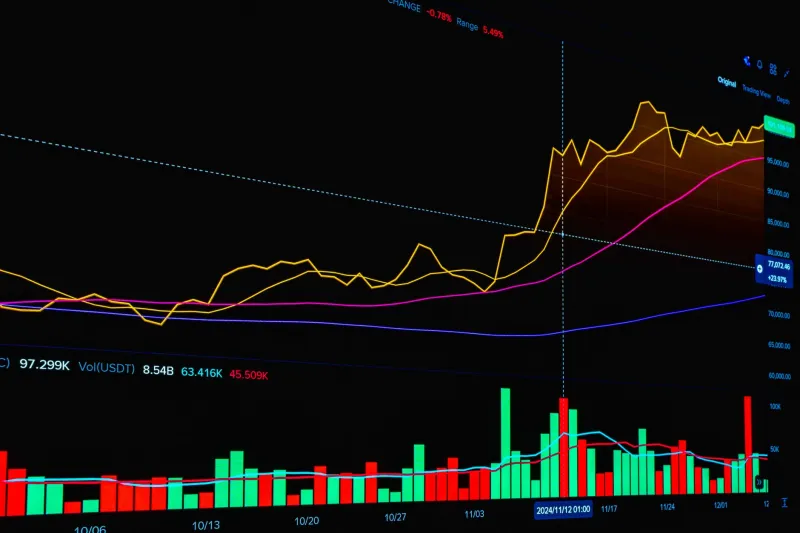
Someone drops a chart in the discussion thread. Clean entry, tight stop, target sitting pretty at three times the risk. The community piles on with green checkmarks and fire emojis. You screenshot it, open MT4, and mirror the trade.
Three days later, your stop gets clipped on a wick and you're down another $200.
Sound familiar? You're not alone. This exact scenario plays out constantly across trading communities, and the culprit usually isn't the setup itself — it's the gap between what works for a $50,000 account and what actually works for yours.
Risk-Reward Is a Ratio, Not a Dollar Amount
Here's something a lot of newer traders miss: a 1:3 risk-reward ratio is completely context-dependent. That ratio tells you the relationship between your stop loss and your target. It says nothing about how much capital you're actually putting at risk per trade, how wide the stop needs to be to give the trade room to breathe, or how many losing trades in a row your account can absorb before your equity starts affecting your psychology.
When a forum contributor with a $75,000 funded account says they're risking 1% to make 3%, they're talking about $750 to make $2,250. When you apply that same percentage to a $3,000 account, you're risking $30 to make $90. On paper, the math is identical. In practice, the experience is completely different — because the position size required to make that ratio work on a volatile pair like GBP/USD or USD/JPY may force you into a stop that's too tight for the pair's natural movement.
That's where the trap lives.
Volatility Eats Tight Stops for Breakfast
Let's say a setup calls for a 15-pip stop on EUR/USD to maintain a clean 1:3 ratio targeting 45 pips. On a $50K account, risking 1% means each pip is worth roughly $33 — totally workable with standard lot sizing. But on a $5,000 account with the same 1% risk rule, you're working with $50 total risk, which puts your pip value around $3.33. That might mean trading a micro lot, which is fine — but it also means any slight spread widening during news or session opens can eat a meaningful chunk of that already-tight stop before the trade even has a chance to develop.
Smaller accounts running narrow stops on volatile pairs are essentially playing a game where the house has an even bigger edge than usual. The ratio looks good. The execution reality doesn't.
What Actually Happens When You Scale Down Without Adjusting
Here's the part nobody talks about in the forum thread: when you copy a setup without adjusting for your account size, you often end up doing one of two things — both bad.
Option A: You keep the same pip-based stop and end up risking a much higher percentage of your account than you intended. That 15-pip stop that was 1% for the original poster might be 4% or 5% for you. A few losing trades and you're in drawdown territory that starts messing with your decision-making.
Option B: You shrink the stop to keep the dollar risk manageable, which makes the trade structurally weaker. Now you're not giving the setup the space it needs, and you're getting stopped out on noise rather than genuine invalidation.
Neither version preserves the edge that made the setup interesting in the first place.
Adapting Forum Strategies to Your Actual Capital
The fix isn't to avoid community setups — some of the best trade ideas genuinely do come out of collaborative discussion. The fix is to run every setup through your own sizing filter before you touch the order button.
Here's a practical way to think about it:
Start with the structure, not the numbers. When you see a setup posted, look at why the stop is placed where it is — is it below a key level, beyond a recent swing, outside the ATR range? That logic is what you want to borrow. The specific pip distance is just a byproduct of that logic applied to the original poster's timeframe and entry.
Calculate your position size backward from your risk tolerance. Decide what percentage of your account you're willing to lose on this trade (most experienced traders stay between 0.5% and 2%), then calculate the lot size that makes that dollar amount match the stop distance in pips. Don't reverse-engineer it the other way.
Check if the ratio still holds after you adjust. Once you've sized correctly for your account, see if the target is still realistic given the pair's average daily range. If the math falls apart at your size, the setup might just not be viable for your current equity — and that's a completely valid conclusion to reach.
Factor in trading costs. On a small account, the spread and commission represent a higher percentage of your potential gain. A 45-pip target sounds solid until you realize you're giving up 2-3 pips on entry and exit, which starts to compress that 1:3 ratio in a hurry.
The Community Is a Resource, Not a Blueprint
This is really the core of it. MetaTrading Forum — and communities like it — are genuinely valuable for idea generation, market perspective, and learning how other traders think through setups. But no forum post comes with your account balance, your broker's spread schedule, your emotional tolerance for drawdown, or your monthly income needs attached to it.
The traders who use community knowledge most effectively aren't the ones copy-pasting every setup they see. They're the ones who extract the reasoning behind a setup and then stress-test it against their own trading reality.
A 1:3 risk-reward ratio is a great starting point for a conversation. It's not a guarantee, and it's not one-size-fits-all. Your account size, your pair selection, your broker's execution environment — all of it shapes whether that ratio is actually working for you or quietly working against you.
Before You Take the Next Forum Trade
Next time you see a setup getting traction in the community, run it through this quick mental checklist before you execute:
- What's the structural reason for the stop placement — not just the pip number?
- What lot size do I need to keep my risk at or below my personal threshold?
- Does the target still make sense relative to the pair's typical daily range and my adjusted entry?
- Am I copying this because it genuinely fits my setup criteria, or just because the thread had a lot of activity?
That last one is the most honest question you can ask yourself. Forum momentum is real, and it's easy to conflate community enthusiasm with trade quality. Keep those two things separate, size your positions for your account — not someone else's — and the community becomes a tool that actually sharpens your edge instead of diluting it.