Why Your Broker Starts Costing You More Right When Your Strategy Is Working
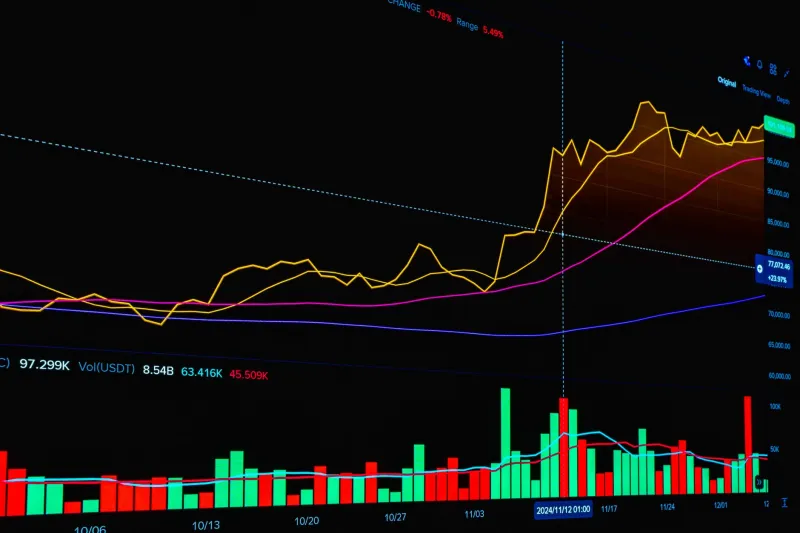
The Moment You Start Winning Is Exactly When Costs Go Up
Here's a scenario that'll feel familiar to a lot of traders in this community: you've spent weeks backtesting a strategy, it looks clean, you go live — and then the market does exactly what you expected, but your P&L doesn't follow. Entries are off by a few pips. Exits feel like you're running through mud. Spreads that were tight during demo suddenly look like the Grand Canyon.
This isn't bad luck. And it's not random. There's a real mechanical reason why trading costs tend to spike at the exact moments your strategy is most active — and understanding it can save you a lot of frustration (and real money).
What's Actually Happening With Spreads During High-Volatility Moments
Most retail traders think of the spread as a fixed cost — like a toll booth you pay every time you enter a trade. But spreads are dynamic. They're a reflection of liquidity: how many buyers and sellers exist at any given price level, and how quickly your broker can match your order against them.
During calm market conditions — say, mid-session on a quiet Tuesday — liquidity is deep. Market makers can easily hedge their exposure, and they pass that efficiency along in the form of tight spreads. But during news events, session opens (especially the London-New York overlap), or when price is breaking out of a key level, liquidity thins out fast. Market makers widen spreads to protect themselves from adverse selection — the risk of being on the wrong side of an informed order.
Here's the kicker: most strategies perform best during exactly those high-activity windows. Breakout systems love volatility. Trend-following setups thrive at session opens. News traders are literally targeting those moments. So the times your strategy fires the most signals are the same times your broker's costs are highest.
That's the tax. And it doesn't show up in your backtest unless you've specifically modeled for it.
The Execution Quality Problem Nobody Talks About Enough
Spreads are only part of the story. Execution quality — which includes slippage, requotes, and partial fills — compounds the issue.
When you're trading with a market maker (which describes most retail forex brokers in the US), your broker is often taking the other side of your trade internally before hedging in the interbank market. During normal conditions, this works fine. But during volatile periods, that internal matching process gets stressed. The broker's exposure grows faster than they can hedge it, and the result is slippage on your fills — sometimes in your favor, but more often against you.
ECN and STP brokers route orders directly to liquidity providers, which sounds cleaner — and often is — but during peak volatility, those LPs widen their quotes too. You're not insulated from the underlying liquidity dynamics just because your order hits an external pool.
The practical takeaway: every broker has a stress point. The question is where that point is, and whether your strategy happens to trade right at it.
How to Actually Test This Before You Commit Real Capital
This is where the forum community can genuinely help each other, because execution testing is one of those things that benefits from shared data.
Here's a simple framework to stress-test a broker's execution quality before running a live strategy:
1. Trade the same pair at the same time across two accounts. If you can run a demo and a micro-live account simultaneously, place identical orders at key volatility windows — the New York open (8:30 AM ET), major news releases, and the first 15 minutes after London opens. Compare fill prices, execution time, and spread at entry. Even small differences compound over hundreds of trades.
2. Log spread data manually or with a script. MT4 and MT5 both support simple scripts that can log bid/ask data at set intervals. Run one during a news event and compare it to a quiet mid-session window. You'll quickly see how much your specific broker's spreads move during the windows your strategy prefers.
3. Calculate your strategy's "real spread cost" vs. the advertised one. If your broker advertises 0.8 pip spreads on EUR/USD but you're entering breakout trades at the London open, your actual average entry spread might be 2.5-3 pips. Run your backtest again with that adjusted cost. If the strategy still holds up, great. If it collapses, you've just saved yourself a painful live drawdown.
4. Look for asymmetric slippage. Honest slippage should be roughly symmetric — sometimes you get a better fill, sometimes worse. If you're consistently getting worse fills on entries and better fills on stops, that's a red flag about how your broker is handling order flow. Pull your trade history and run the numbers.
What to Look For in a Broker If Execution Quality Matters to Your Strategy
Not all brokers handle liquidity the same way, and the differences matter a lot depending on your style.
Scalpers and short-term breakout traders are the most sensitive to this. If you're holding trades for hours or days, a 1-pip spread difference at entry is relatively minor. If you're targeting 5-10 pip moves, that same difference is 10-20% of your expected gain.
A few things worth investigating when evaluating a broker:
- Execution model transparency. Does the broker clearly state whether they're a market maker, ECN, or STP? Hybrid models exist and aren't inherently bad, but you should know what you're working with.
- Slippage statistics. Some brokers publish execution quality reports. It's worth asking for them, and worth being skeptical if they don't have them.
- Spread behavior during news. Check community forums (hey, that's what we're here for) for reports on how specific brokers handle spreads around NFP, FOMC, and CPI releases. Lived experience from other traders is often more reliable than marketing copy.
- US regulatory status. For US-based traders, you're limited to CFTC/NFA-regulated brokers, which narrows the field considerably. That's not necessarily a bad thing — the regulatory oversight adds a layer of accountability — but it does mean you're working with a smaller pool of options.
The Community Angle: Share Your Execution Data
One thing this forum is genuinely good for is aggregating real-world execution data that no single trader could collect alone. If you're running a strategy across multiple brokers, or if you've noticed a specific broker behaving differently during certain market conditions, that information is valuable to the whole community.
The spread-widening-during-volatility dynamic is one of those things that's easy to overlook in isolation but becomes obvious when you compare notes with other traders running similar strategies. Post your data. Ask about others' experiences. That peer-to-peer intelligence is exactly the kind of edge that doesn't show up in any course or indicator library.
The market charges you more when it's most active. The least you can do is know exactly how much you're paying — and make sure you're getting value for it.