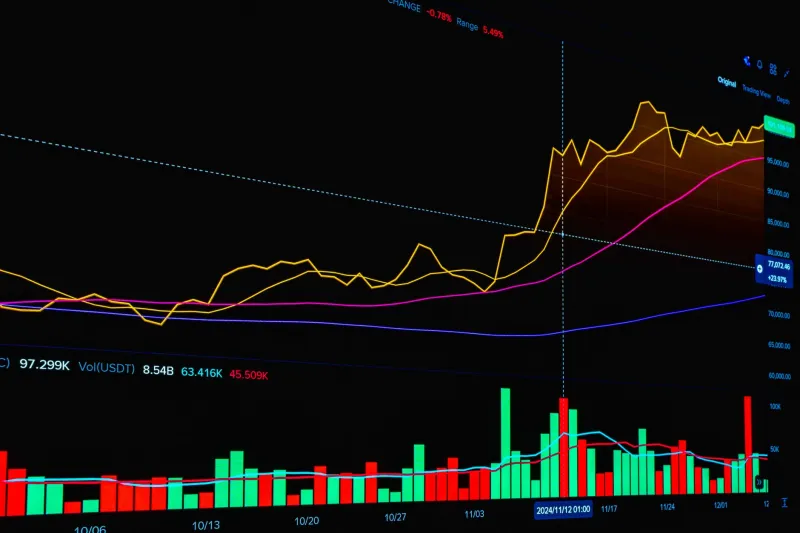
Not Every Forum Setup Is Worth Your Capital: A Trader's Guide to Separating Signal from Hype

The Forum Trap Nobody Talks About
Here's a scenario that plays out in trading communities every single day. Someone drops a chart, lays out what looks like a clean setup, tags it with a confident price target, and within minutes the thread is flooded with agreement. It feels like consensus. It feels like confirmation. And for a lot of traders, that feeling is enough to pull the trigger.
That's the trap.
Peer-to-peer trading communities — Discord servers, Reddit threads, forums like this one — are genuinely valuable when used correctly. The collective knowledge in a good trading community can shorten your learning curve by years. But that same environment can also funnel you straight into bad trades if you don't know how to filter the noise from the actual signal.
The good news? There's a systematic way to do it. And once you build this habit, you'll never look at a forum setup the same way again.
Start With the Poster, Not the Chart
Most traders do this backwards. They look at the chart first, get excited about the setup, and only then — if at all — think about who posted it. Flip that around.
Before you analyze a single candlestick, ask: who is this person, and what's their track record in this community?
A poster who's been around for six months and consistently shares both their wins and their losses is worth listening to. Someone who showed up three weeks ago and has only posted setups that "worked" is a massive red flag. Confirmation bias is real, and it's rampant in trading forums. People remember and share their winners. The losers get quietly forgotten.
Look for a posting history that includes accountability — someone who follows up on their own calls, explains what went wrong when a trade missed, and doesn't disappear after a bad week. That kind of transparency is rare, and it's also the clearest signal that you're dealing with someone who's actually trading, not just performing.
Ask the Questions That Make Bad Posters Uncomfortable
If you genuinely want to stress-test a forum setup, ask direct questions in the thread. The response — or lack of one — tells you almost everything.
What's the drawdown history on this approach? Anyone with a real edge can tell you roughly how bad it gets before it gets good. If someone can't answer this or gives you a vague non-answer, that's a problem. Drawdown is the ugly side of every strategy, and traders who skip over it usually haven't experienced it yet — which means they haven't traded their system through a real losing stretch.
What's the sample size behind this setup? A setup that's "worked every time" over eight trades means absolutely nothing statistically. You need dozens — ideally hundreds — of occurrences to start drawing meaningful conclusions. If someone's confidence is built on a handful of trades, what you're really looking at is recent luck, not a proven edge.
What's the risk-reward ratio, and where exactly does the setup get invalidated? Vague setups with no clear stop placement are a dead giveaway. A legitimate trader knows where they're wrong before they enter. If someone can't tell you where price needs to go to prove the thesis invalid, they're guessing — and they're asking you to guess with them.
Is this trade sized appropriately for the risk? Sometimes you'll see posters casually mention they're going in heavy on a setup. That tells you something about how they manage risk (or don't). A trader who treats every setup like a lottery ticket isn't someone whose analysis you want to be mirroring.
Red Flags That Should Stop You Cold
Beyond the questions, there are a handful of patterns that should immediately cool your interest in a forum setup.
Urgency language. Phrases like "this is about to move," "last chance to get in," or "don't miss this" are borrowed from marketing, not trading. Real setups don't expire in the next fifteen minutes, and traders who understand their edge don't pressure you to act fast.
No context for why the setup works. A chart with a few lines drawn on it and a price target isn't analysis — it's decoration. What's the underlying logic? Is it a structural level? A momentum divergence? A pattern with historical significance? If there's no "why," there's no edge. There's just a picture.
Outcome-focused framing with no risk acknowledgment. If someone presents a setup purely in terms of potential profit and never mentions the scenario where they're wrong, that's not a trading plan. It's wishful thinking dressed up as analysis.
Heavy social validation without scrutiny. A thread where everyone agrees and nobody asks hard questions is an echo chamber, not a trading discussion. The best communities are the ones where setups get challenged. If everyone's piling on with agreement, it's worth wondering whether anyone actually did their own analysis.
How to Use Forum Ideas Without Letting Them Run Your Account
None of this means you should ignore community setups entirely. Some of the best trade ideas you'll ever encounter will come from other traders, and that's genuinely one of the most valuable things about being part of a trading community.
The key is using those ideas as a starting point for your own analysis, not as a substitute for it.
When a setup catches your attention, run it through your own process. Pull it up on your own charts. Check it against your own indicators or methodology. Ask yourself whether you'd have spotted this setup independently, or whether you're only seeing it because someone else pointed it out. If it holds up under your own scrutiny, great — now you have additional conviction. If it doesn't, that's also useful information.
Also worth noting: even a well-reasoned setup from a credible poster isn't a guarantee. Markets don't care about logic. The goal isn't to find perfect setups — it's to find setups with a genuine edge that you understand well enough to manage properly, including knowing when to cut the loss and move on.
Build Your Own Filter, Then Stick to It
Over time, you'll develop a feel for which voices in your trading community consistently add value and which ones are just noise. That's one of the real benefits of being an active, engaged member of a forum like this one — you accumulate context that helps you calibrate.
But until you've built that context, lean on the framework. Ask about drawdown. Ask about sample size. Ask where the setup gets invalidated. Look for accountability in the poster's history. Watch for urgency and outcome-focused framing.
Your capital is real. The setups in your forum might be great, or they might be garbage dressed up in confident language. Learning to tell the difference isn't cynicism — it's just good risk management.