Going Transparent: Why Traders Who Show Their Full Equity Curve Bounce Back Faster

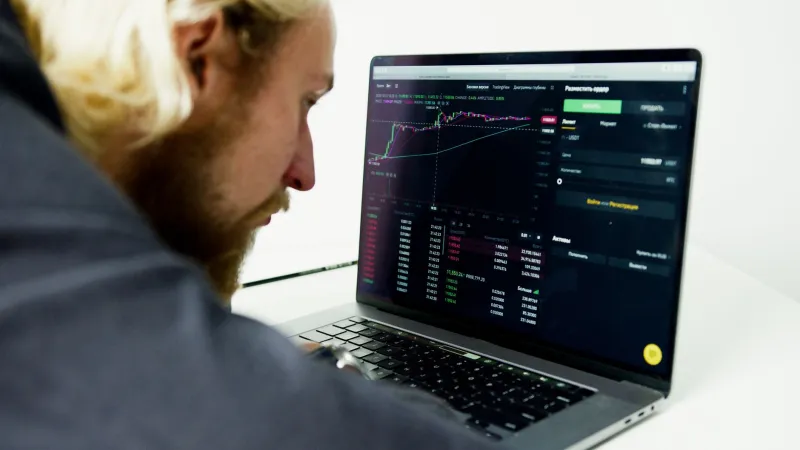
Photo: trader analyzing performance charts on computer screen with community, via img.freepik.com
There's a certain kind of courage it takes to post your actual equity curve on a public forum. Not the cherry-picked stretch where everything went right — the whole thing. The ugly February where you gave back three months of gains. The sideways chop that made you question your entire approach. The account that looked great on paper until it didn't.
A growing number of traders here at MetaTrading Forum have been doing exactly that, and the results are worth talking about.
What "The Forum Effect" Actually Looks Like in Practice
When we asked members who regularly share their performance data — wins and losses together — a pattern kept coming up: they tend to recover from drawdowns faster than traders who keep everything private.
That's not just a feel-good story. It has some real mechanics behind it.
One member, a swing trader from Texas who goes by the handle RanchoPips, put it bluntly: "When I started posting my equity curve every Friday, I couldn't hide from myself anymore. The forum wasn't even that harsh — it was just that I knew people were watching. That changed how I processed a bad week."
That's the core of what we're calling the Forum Effect. It's not that the community is necessarily giving you better advice than you'd get on your own. It's that the act of public accountability restructures how you emotionally process a loss.
The Psychology Behind Public Accountability
Sports psychologists have studied this in athletes for decades. When performance is observed — especially by a peer group rather than an authority figure — the mental recovery cycle tends to compress. You're less likely to ruminate privately and more likely to reframe and move forward.
Trading has the same dynamic, just with more spreadsheets.
When you post a drawdown publicly, a few things happen almost immediately. First, you're forced to articulate what went wrong. That alone is more productive than sitting with a vague sense of frustration. Second, you get responses — some useful, some not — that force you to defend or reconsider your reasoning. Third, and maybe most importantly, you stop catastrophizing in isolation.
Private losses have a way of ballooning in your head. A 7% drawdown feels like an existential crisis at 11 PM when you're staring at your MT4 terminal alone. The same drawdown, explained to a community that's seen worse and come back from it, starts to look like what it actually is: a data point.
Is It Real Progress or Just Confirmation Bias?
Here's where we have to pump the brakes a little, because this is a legitimate concern.
The risk with any community-driven accountability system is that it can become an echo chamber. If everyone in your corner of the forum is trading similar setups and losing in similar ways, public transparency doesn't necessarily improve your edge — it might just normalize your mistakes.
One forum member, a prop trader from Chicago, raised this point directly: "I shared my curve for three months and got a lot of supportive replies. My drawdown was still there. The community felt good, but I wasn't actually fixing the problem — I was just getting applause for being honest about it."
That's a fair critique. Transparency without critical feedback is just performance. The Forum Effect only works when the community pushes back constructively, not when it simply validates.
The traders who seem to benefit most are the ones who invite critique specifically. Not "here's my curve, thoughts?" but "here's my curve, here's what I think went wrong, tell me where I'm missing something." That framing invites a different kind of response.
What the Data Looks Like When You Track Recovery Time
We're not running a clinical study here, but we did ask a group of active MetaTrading Forum members to self-report on their last significant drawdown — how long it took to psychologically reset and return to disciplined execution, not just to break even on the account.
Traders who shared their equity curves publicly during the drawdown reported shorter recovery windows than those who kept things private. The difference wasn't in the size of the drawdown or the strategy being used. It was in whether they had gone through the process of explaining and discussing it with others.
Again, this isn't a controlled experiment. But the consistency of the pattern across different traders, different strategies, and different market conditions is hard to ignore.
How to Do This Without Making It a Performance
If you want to try this, a few practical notes from traders who've done it well:
Be specific about what you're sharing. A screenshot of your MT4 account summary tells a partial story. A proper equity curve with drawdown periods labeled and annotated tells a useful one.
Separate the facts from the narrative. Post the numbers first, then your interpretation. Let the community respond to the data before they respond to your framing of it.
Don't only post when things go wrong. The traders who get the most useful feedback share consistently — good weeks and bad ones — so the community has context when a drawdown hits.
Be ready for responses that sting a little. The most useful feedback usually isn't the most comfortable. If you're only looking for reassurance, you're going to get the echo chamber version of this, not the growth version.
The Bottom Line
Public transparency about trading performance isn't a magic cure for losses, and it's not going to fix a broken strategy. But for traders who are already doing the fundamental work, sharing your equity curve — the real one — appears to compress the emotional recovery cycle in a meaningful way.
The Forum Effect is real, but it's conditional. It works when you invite honest feedback, when your community is capable of giving it, and when you're genuinely open to hearing things you don't want to hear.
If all three of those conditions are in place, going public with your curve might be one of the more underrated tools in your trading toolkit.
What's your experience been? Have you shared your equity curve here before? Drop it in the thread below — including the ugly parts.