The Clock Is Costing You Money: How US Traders Can Finally Use Forex Session Timing as an Edge
You're Trading the Wrong Hours and Wondering Why It's Not Working
Here's a conversation that happens on this forum at least once a week. A trader posts a setup that looked perfect — clean structure, solid R:R, textbook entry. They took the trade. It went nowhere. Or worse, it whipsawed them out before eventually doing exactly what they expected.
Nine times out of ten, when you dig into the timestamp, the trade was entered during dead hours. Low liquidity. Thin participation. A market that's essentially just noise until the big players show up.
For US-based traders, the session timing problem is particularly acute — and particularly fixable.
A Quick Breakdown of the Forex Clock
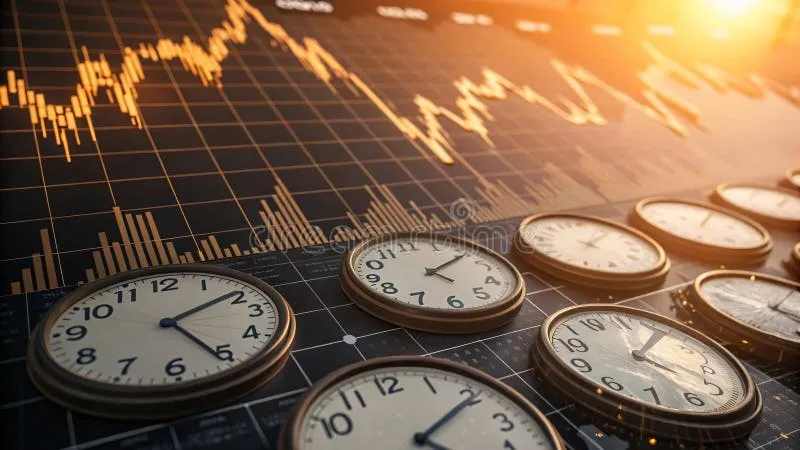
Forex runs 24 hours on weekdays, but that doesn't mean all 24 hours are equal. The market has three major sessions: Asian (Tokyo), European (London), and North American (New York). Each has distinct characteristics, and the overlaps between them are where the real action concentrates.
Here's what that looks like in Eastern Time, which is the reference most US traders should be working from:
- Asian Session: Roughly 7 PM to 4 AM ET
- London Session: 3 AM to 12 PM ET
- New York Session: 8 AM to 5 PM ET
- London-New York Overlap: 8 AM to 12 PM ET
That four-hour overlap window — 8 AM to noon Eastern — is the most liquid, most volatile, and most directionally reliable period in the entire forex trading day. If you're a US trader and you're not prioritizing this window, you're leaving a significant edge on the table.
What the London-New York Overlap Actually Delivers
During that overlap, you've got institutional players from both continents active simultaneously. London banks haven't closed yet. New York institutions are firing up. The interbank market is operating at full capacity.
What does that mean practically? Spreads are tightest. Volume is highest. Breakouts are more likely to follow through rather than fake out. Trends that started during the London open often get confirmed or extended during this window.
For pairs like EUR/USD, GBP/USD, and USD/CHF, the overlap is almost always the highest-volume period of the day. Average daily range contributions during this window consistently outpace other sessions by a significant margin. EUR/USD, for example, has historically completed the largest portion of its daily range between 8 AM and noon ET.
That's not a secret. But it's amazing how many traders either don't know it or don't trade accordingly.
The Asian Session Trap US Traders Fall Into
Here's where a lot of forum members go wrong. They're up late — maybe it's 11 PM, maybe midnight — and they see price doing something interesting on the chart. A level is being tested. A pattern is forming. They take the trade.
The problem is that during the Asian session, unless you're trading JPY pairs or AUD/NZD, you're often operating in a low-liquidity environment where institutional participation is minimal. Price can drift, chop, and tease setups that simply don't have the volume behind them to follow through.
JPY crosses — USD/JPY, EUR/JPY, AUD/JPY — are the legitimate exceptions here. Tokyo is actually active during this window, and these pairs can show real directional movement. AUD/USD and NZD/USD also tend to have more meaningful price action during Asian hours given the proximity to Australian and New Zealand market hours.
For everything else? Late-night setups on EUR/USD or GBP/USD during Asian hours deserve serious skepticism.
Pair Selection by Session: A Practical Framework
Rather than trading whatever looks interesting at whatever time you happen to be at your desk, try mapping your watchlist to the session clock.
During London Open (3–8 AM ET, for early risers): EUR/USD, GBP/USD, EUR/GBP, and EUR/JPY tend to show strong directional moves as European institutional orders hit the market. This is also when London traders are clearing overnight positions and establishing new directional bias.
During the London-New York Overlap (8 AM–12 PM ET): This is your highest-probability window for the major USD pairs. EUR/USD and GBP/USD are the workhorses here. Breakouts from the Asian range often get resolved during this period. News events — including most US economic data releases at 8:30 AM ET — land in this window, which creates both opportunity and risk.
During New York Afternoon (12–5 PM ET): Liquidity thins as London closes. EUR/USD often consolidates or reverses moves made in the morning. This is a higher-risk period for trend-following entries. USD/CAD can be an exception given Canadian market hours align here.
Asian Session for US Night Traders: Stick to JPY pairs, AUD/USD, and NZD/USD if you're trading this window. Keep position sizes conservative given the lower liquidity environment.
How to Actually Build This Into Your Routine
The most practical thing you can do right now is open your trade journal — you have one, right? — and tag every trade with the session it was entered in. Run that data for the last three months. Most traders who do this exercise are genuinely surprised by how much their results cluster around specific time windows.
If you don't have that data yet, start collecting it today. Add a "Session" column to your journal: Asian, London, Overlap, NY Afternoon. After 60 trades, you'll have a clearer picture of where your actual edge lives on the clock.
Then comes the harder part: being willing to close your charts during the sessions where your edge isn't present. That requires discipline. It means acknowledging that "waiting for the right window" is an active trading decision, not laziness.
The forum has plenty of threads about finding the perfect indicator or the ideal setup. Fewer people talk about the simple, unsexy advantage of just trading at the right time of day. But the traders who've internalized session dynamics — they tend to be the ones posting consistent results month after month.
The clock is either working for you or against you. Might as well make it work for you.