The Signal-to-Execution Gap: Why That Forum Setup Looked Perfect at 2 AM and Failed by 10
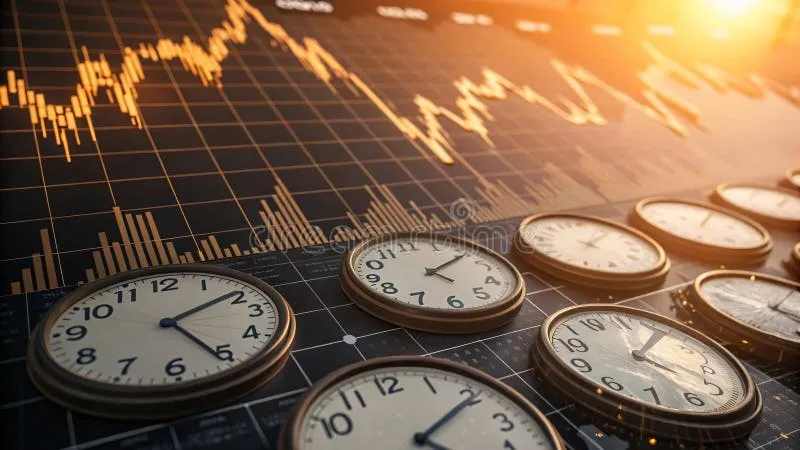
Photo: forex trader looking at clock and trading charts early morning, via thumbs.dreamstime.com
You've seen it happen. Someone posts a beautiful setup in the forum overnight — clean structure, clear entry, logical stop. You wake up, check the thread, and the chart still looks right. You pull the trigger at 9:40 AM Eastern and the trade immediately does exactly the wrong thing.
The setup wasn't wrong. But you weren't executing the same setup that was described.
This is the signal-to-execution gap, and it's one of the most quietly damaging dynamics in forum-based trading. It doesn't show up in backtests. It doesn't show up in the original poster's win rate. It shows up in your account, when you're the one executing hours after the signal was framed.
Why Forum Timing and Market Timing Are Different Clocks
Most active forex forums — including the threads here on MetaTrading Forum — see their highest posting volume during two windows: late evening US time (roughly 9 PM to midnight Eastern) and very early morning (1 AM to 4 AM Eastern). These windows overlap with the Asian session and the early stages of the London session.
The traders posting setups during those hours are often analyzing charts that reflect those specific market conditions: lower liquidity, tighter ranges, and price behavior that tends to respect technical levels more cleanly than it will a few hours later.
By the time a US-based trader wakes up, reads the thread, and considers executing — we're talking 7 AM, 8 AM, sometimes later — the market is a fundamentally different environment. London is in full swing. New York is about to open. Institutional flows are moving. The spread between what was described and what's actually on the chart has widened, sometimes dramatically.
What Changes Between Post Time and Execution Time
Let's get specific about what actually shifts in those hours:
Liquidity. The Asian session is known for range-bound, lower-volume price action. Support and resistance levels hold more consistently. By the time the New York session opens, liquidity surges, and those same levels get tested — and sometimes broken — with much more force.
Spread and slippage. Even on major pairs, spreads during the Asian session can differ meaningfully from New York open spreads, particularly around economic data releases. A setup with a tight stop that was viable at 2 AM might have its stop within the noise range by 9:30 AM.
The news calendar. US economic releases — CPI, NFP, FOMC minutes — almost always drop during the US session. A setup posted before a major release is carrying a risk profile the original poster may have noted, but that a tired trader skimming the thread at 8 AM might miss entirely.
Price has already moved. This one sounds obvious, but it's easy to underestimate. If a setup was framed around a retest of a specific level and that level has already been tested (and held, or broken) while you were asleep, the trade thesis has changed. You're not entering on the retest — you're entering on whatever comes after it.
Real Examples From the Forum
One thread from a few months back illustrated this perfectly. A member posted a EUR/USD short setup at 1:15 AM Eastern, identifying a rejection from a key resistance zone during Asian hours. The setup was clean — multiple members confirmed the read, and the original poster's entry was filled cleanly with a 12-pip stop.
By 8:30 AM Eastern, US retail sales data dropped hotter than expected. EUR/USD spiked 40 pips through that resistance zone in about 90 seconds. Three traders who had been planning to enter on the retest during the New York open reported getting stopped out immediately on entry.
The original poster had a profitable trade. The follow-on executors had losses. Same setup. Different trade.
How to Adjust for the Gap
This isn't an argument for ignoring forum setups during the US session. It's an argument for recalibrating them before you execute.
Re-read the setup as if you wrote it right now. Don't execute based on someone else's analysis from six hours ago. Use it as a starting point, then rebuild the thesis with current price action. If the original logic still holds with fresh eyes, it's worth considering. If you're rationalizing why it still applies, that's a red flag.
Check what's on the calendar before you enter. The DailyFX economic calendar takes 30 seconds to check. If there's a high-impact US release within an hour of your planned entry, either wait until after the release or skip the trade entirely.
Adjust your risk parameters for the session. Stops that were appropriate for Asian session volatility are often too tight for New York open conditions. If the original setup had a 10-pip stop, consider whether that makes sense at 9:35 AM on a busy news day.
Look at what price actually did overnight. Before executing anything from a forum thread, scroll back through the overnight price action. Has the setup already played out? Has it been invalidated? Is the entry still at a logical point or has it been left behind?
The Broader Lesson About Forum-Based Execution
Forums are incredible for generating ideas, stress-testing analysis, and building pattern recognition. They're not real-time execution desks. The trader who posted that setup at 2 AM was working with the market conditions in front of them at that moment. You need to do the same thing.
Think of forum setups the way a good chef thinks about a recipe from a different region: the technique is transferable, but you might need to adjust for what's actually available in your kitchen right now.
The signal-to-execution gap isn't going away. But once you know it exists, you can stop executing other people's trades and start executing your own — informed by the community, but grounded in the market conditions you're actually trading in.
Have you been burned by this gap? Share the setup and the timing in the thread — it's useful data for everyone here.