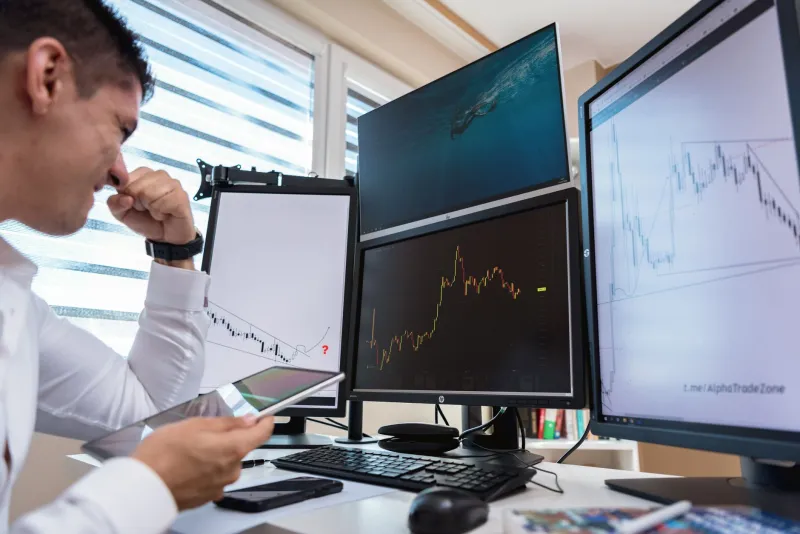
Fed Days Don't Have to Be Chaos: Turning Forum Panic Into a Pre-Market Checklist
Photo: 42-BRT, CC BY-SA 4.0, via Wikimedia Commons
There's a rhythm to a macro week that every US-based forex trader eventually learns. Tuesday morning, everyone's arguing about what CPI will print. Wednesday afternoon, the FOMC statement drops and the EUR/USD chart looks like a seismograph. By Thursday, the forum is full of screenshots — half of them celebrating, half of them grieving.
If you've traded through a few of these cycles, you know the pattern. The question is whether you've built a system around it, or whether you're just along for the ride every eight weeks.
The 48 Hours Before: Read the Room, Not Just the Chart
Big US events don't sneak up on anyone. The FOMC calendar is public. CPI dates are published a year in advance. Election cycles dominate the news for months. So the volatility isn't a surprise — your preparation either happened or it didn't.
This is where a trading community earns its keep. In the days before a major release, the forum becomes a crowdsourced sentiment gauge. You'll see traders posting their base cases, their "what if" scenarios, and — most usefully — their levels. When fifteen people independently flag the same support zone ahead of a Fed decision, that's information no single chart can give you.
Don't take it as a signal. Take it as a map of where the crowd is watching, because that's where price tends to react.
The Checklist: Written When Calm, Executed When Not
The single biggest risk-management failure on news days isn't a bad prediction — it's improvising. The traders who consistently survive volatility all seem to run some version of the same pre-event checklist:
- Know the exact release time in your timezone. Eastern, Pacific, whatever — set the alarm. "Around 2 PM" is not a plan.
- Decide your exposure before the event. Most of the time, the right answer is to reduce size or flatten entirely. Spreads widen, slippage spikes, and stops get skipped. If you're in a trade through the release, you're accepting terms you can't see.
- Pre-write your two scenarios. If the print comes in hot, what do you expect? If it's a dovish surprise, what then? Write it down beforehand, because your brain will not be reliable for the first 90 seconds after a red candle.
- Ban the re-entry rule violation. The most expensive trades on any news day happen five minutes after the first loss. If you get stopped out on the initial spike, sitting out the chop is a position.
Why the Forum Makes You Better at This (If You Let It)
There's a reason solo traders struggle more with event days than community traders do. Alone, the adrenaline tells you this release is your big moment. In a thread with a hundred other people watching the same tape, reality sets in: nobody consistently predicts the reaction, and the pros are mostly managing risk, not gambling on direction.
The most valuable posts after a Fed day aren't the victory laps. They're the traders who say "I sat this one out, here's why" or "my stop got slipped 40 pips, here's the fill data." That's the collective memory that keeps the next event from being a repeat performance.
Election Weeks Are Just Fed Days With Worse Odds
Every four years, the same lesson gets relearned: election night is not a tradeable event in any reliable sense. The moves are huge, the direction is genuinely uncertain, and the market can whipsaw on a partial vote count from a single county.
The community consensus that's formed after the last few cycles is worth adopting wholesale — reduce or close exposure, widen any remaining stops dramatically or remove them from the equation entirely, and treat the week as a capital-preservation exercise. The opportunities will still be there in December. Your account needs to be there too.
Build the Habit, Not Just the Plan
Here's the compounding part: if you write a checklist for every major US event — FOMC, CPI, NFP, elections — within a year you'll have a personalized playbook that no course can sell you. Each event adds a line. Each mistake gets memorialized in your own handwriting.
And when you post your version back to the forum? Somebody newer than you just dodged their first account-killer. That's how this place is supposed to work.