The Crop Line Never Lies: Reading MT4 Screenshots Like a Risk Manager

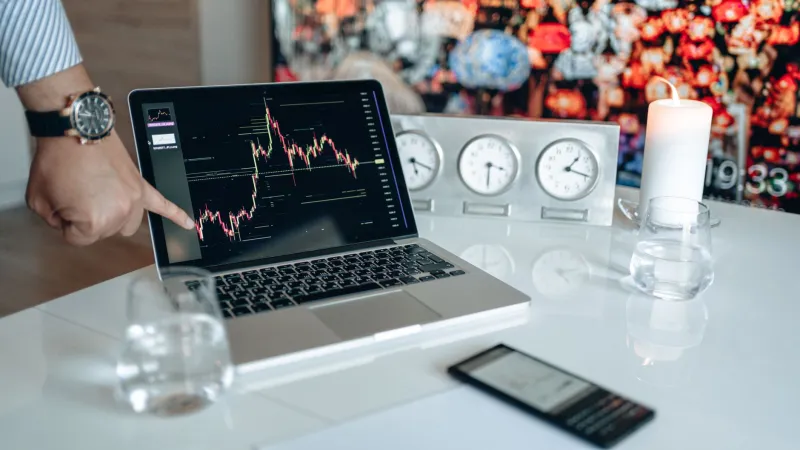
Photo: MT4 account history screen on laptop with trading notes and coffee, via static.wikia.nocookie.net
Every forum has a version of this thread. Someone posts a screenshot of a closed trade, the profit column is green, and the caption says something like: this setup prints. The replies fill up with fire emojis. And somewhere in the back of your mind, a small voice asks: where is the rest of it?
That voice is the one worth listening to. Screenshots are useful. They are also the easiest thing in trading to crop, filter, and frame. Peer-to-peer learning only works when we treat a posted trade as a claim to examine, not a result to worship. So here is a practical way to read MT4 and MT5 screenshots like a risk manager instead of a fan.
Start at the Edges, Not the Green
Before you look at profit, look at what the screenshot includes. In MT4 and MT5, the account history tab can show ticket, open time, type, size, symbol, price, swap, profit, and more. Posters can drag columns around. They can also collapse the window until only the pretty part shows.
If the image shows a single row with a profit number and nothing else, you are looking at a highlight, not a record. That does not make the poster a liar. It does mean you cannot learn much from it. A complete trade record gives you entry, exit, size, symbol, time, and the costs attached. A cropped one gives you a mood.
The Math Between Entry and Exit
Spread is not a rounding error. A 15-pip win on a pair with a 3-pip spread is a different trade than the same win on a raw-spread account with commission. Swap can turn a swing trade into a smaller winner or a quiet loser. Commission can shave the edge off a scalping setup that looks brilliant in a screenshot.
Ask whether the profit shown is net or gross. In most MT4 and MT5 statements, the profit column already includes swap and commission for closed trades, but the visible screenshot may not show those columns. If the poster cannot tell you the net number, treat the result as incomplete. This is not about catching anyone. It is about learning the real cost of the setup.
Lot Size Makes the Percentage Lie
A $700 win sounds impressive until you learn it came from five lots on a $20,000 account. A $70 win sounds small until you learn it was 0.05 lots on a $1,000 account. Size changes the story. So does the account equity at the time of entry.
A screenshot of the current balance after a deposit is not the same as the equity during the trade. If you want to understand risk, ask for lot size, stop distance, and account equity at entry. Then do the math yourself. A trade that risked 0.5 percent is a different lesson from one that risked 8 percent, even if both ended green.
Partial Closes and the Missing Losers
Partial closes are where screenshots get creative, sometimes on purpose and sometimes just because the terminal view is messy. A trader can show a winning final ticket while earlier partials were closed at a loss. A trade can look like one clean entry and exit when it was really a scale-in, average-down, white-knuckle recovery.
If a post shows one ticket but the strategy uses multiple entries, ask for the full cycle. If the poster says they never use a stop loss, ask what the floating drawdown was. A closed profit does not tell you how close the account came to a margin call. The best forum threads show the whole sequence, including the ugly middle.
Broker, Server, Time Zone, and Account Type
A screenshot from an offshore broker with wider spreads is not directly comparable to a US-regulated account. A demo account is not a live account. A cent account can make a strategy look smoother than it will feel with real dollars. Server time can make a 3 AM Eastern trade look like a London session trade if you do not check the clock.
None of this means the post is fake. It means context matters. Before you copy a setup, ask what account type, broker, and server time the poster uses. If they will not say, enjoy the screenshot but do not build a strategy around it.
Date Range and Sample Size
One screenshot is an anecdote. A week of screenshots is a small sample. A verified statement over three months is evidence. If a thread claims a setup is reliable, look for a date range, number of trades, average risk, and maximum drawdown. A 90 percent win rate over 10 trades is not the same as 55 percent over 300.
You do not need to demand a full audit from every casual poster. But when someone is teaching a method, the burden of context goes up. The forum is at its best when the people making big claims are the ones most willing to show the boring parts.
A 60-Second Screenshot Audit
When a trade screenshot catches your eye, run this quick checklist before you take notes:
- Can you see the full ticket, including symbol, type, size, and times?
- Are swap and commission visible, or at least discussed?
- Is the profit net or gross?
- Do you know the account equity and risk percentage at entry?
- Were there partial closes or multiple entries?
- Is this live, demo, or a challenge account?
- Does the post show a date range or just one moment?
If the answer to most of these is no, the screenshot is entertainment. That is fine. Just do not file it under education.
How to Ask Without Starting a Fight
Tone matters. A forum can turn defensive fast when a new member walks in and demands proof. Try curiosity instead of cross-examination. Something like: Nice result. I am trying to learn the context. Can you share net P/L including swap and commission, lot size, and account equity at entry? If there were partials, would you mind showing the full cycle?
Most honest posters will answer. Some will ignore you. A few will get weird about it. That reaction is also information. The goal is not to make every thread a courtroom. The goal is to keep the forum's learning standard high enough that a green screenshot is the start of a conversation, not the end of one.
The Bottom Line
The crop line never lies. It tells you exactly what someone chose to leave out. That does not mean every cropped screenshot is a scam. It means your job as a reader is to ask what the full trade would show. Do that consistently and you will learn more from fewer posts, which is usually the best trade a forum can offer.