Why Copying a Winning Setup Still Leaves You in the Red
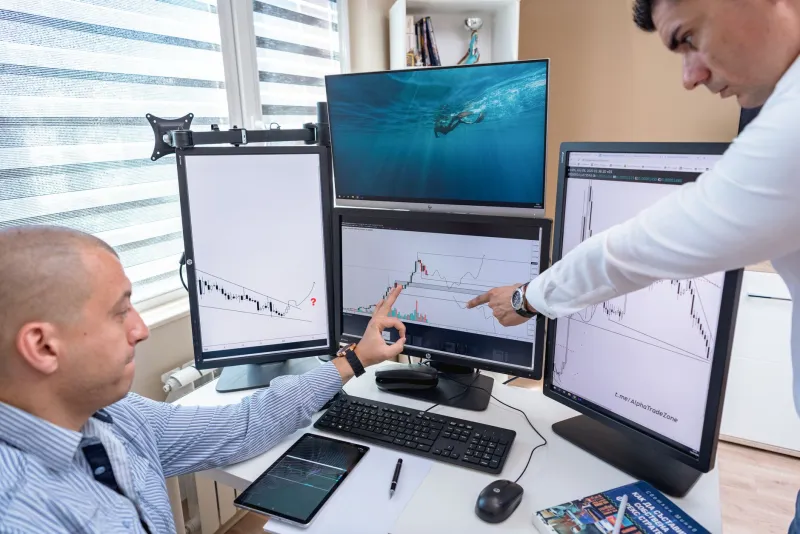
The Setup Looked Perfect. The Trade Was a Disaster.
It happens all the time here on MetaTrading Forum. A seasoned trader posts a clean EUR/USD setup with entry, stop, and target all mapped out. The logic is airtight. The chart looks textbook. They close it out green a day later. You find the post, dig through their history, see a string of winners, and think — this is it.
So you take the next version of that same setup. And you lose.
Not because the setup is broken. Not because the veteran got lucky. But because what you copied was the surface. The thing that actually made it work never made it into the post.
Position Sizing Is the Hidden Variable Nobody Talks About
When a trader with a $50,000 account risks 0.5% on a setup, they're risking $250. Their emotional relationship with that trade is completely different from a newer trader risking $250 out of a $3,000 account — which is over 8% of their capital.
The mechanics look identical on a chart screenshot. The psychological experience is worlds apart.
The veteran can sit through a 20-pip drawdown without flinching because it barely moves the needle on their account. You're white-knuckling it, watching every tick, and eventually closing early for a loss right before price reverses exactly as the original setup predicted.
Same setup. Completely different outcome. The difference wasn't the entry — it was the sizing context that never got mentioned in the post.
Market Regime: The Setup That Worked Last Month Might Be Dead Now
Another layer most copy-traders overlook is timing. A momentum breakout strategy that absolutely crushed it during a trending market in Q1 can bleed you dry in a choppy, range-bound summer session. Volatility regimes shift. Liquidity patterns change around economic calendars. The dollar behaves differently heading into a Fed announcement than it does two weeks after one.
When you find a forum post with a great-looking setup, you're often looking at a snapshot from a specific market environment. That context rarely gets documented. The trader who posted it has internalized, through years of experience, how to recognize when their setup is in its element and when to sit on their hands. They're filtering in real time without even realizing they're doing it.
You don't have that filter yet. So you take every instance of the pattern, including the ones that were always going to fail.
Discipline Isn't Transferable
Here's the part that stings a little. Emotional discipline — the kind that lets a trader hold through a drawdown, avoid overtrading after a loss, and stick to the plan when price action gets ugly — is built over hundreds of trades. It's not a setting you can turn on.
When a forum veteran posts their setup, they're also bringing years of conditioned behavior to that trade. They've seen the setup fail before. They know exactly how it fails, which means they can recognize early when something's off and manage accordingly. They've already lived through the version where they panicked and closed early. They don't do that anymore.
You haven't lived through that yet. So when the trade starts going against you, your brain defaults to survival mode — and you make decisions that the original trader would never make in the same situation.
The Hidden Variables That Never Make It Into Posts
Think about everything a forum trader doesn't include in a typical setup post:
- What they passed on before finding this entry
- How many similar setups they've taken this week (and whether they're avoiding overexposure)
- What the higher timeframe structure looks like
- Which news events they're watching around the trade
- How they're adjusting their stop based on current ATR
- Whether they're in drawdown and sizing down accordingly
- The three versions of this setup that looked identical but that they didn't take
All of that invisible decision-making is part of the edge. The chart screenshot with arrows is just the final output of a much more complex process.
How to Actually Reverse-Engineer Someone's Edge
The good news is you're not stuck. You can extract real value from forum setups — you just have to go deeper than the entry and target.
Ask questions in the thread. Don't just screenshot and run. Ask the poster what they were looking at on the higher timeframe. Ask what would have made them skip this setup. Ask how they sized it relative to their account. Most experienced traders here are happy to break it down — that's kind of the whole point of a forum.
Track the setup across market conditions. Before you put real capital on the line, go back through historical charts and find 20 or 30 instances of the same pattern. Note what was happening around it — trending or ranging market, high or low volatility, pre- or post-news. You'll start seeing when it works and when it doesn't.
Paper trade it first, but paper trade it right. That means journaling every decision, including the ones where you almost took the trade but didn't. The pattern of what you're filtering out matters as much as what you're taking.
Scale way down before you scale up. If you're serious about testing someone else's approach, do it with position sizes small enough that you genuinely don't care about the outcome emotionally. You're buying data, not chasing profits.
The Forum Is a Library, Not a Signal Service
This community has a ton of genuinely sharp traders sharing real analysis and hard-won insights. But MetaTrading Forum works best when you treat it like a library — a place to study, question, and build your own understanding — rather than a tip sheet where you just execute whatever looks good.
The setups that get posted here are starting points, not finished products. The trader who posted it has context you don't yet have. Your job is to close that gap, not skip over it.
Copy the thinking. Copy the framework. Copy the questions they're asking before they enter. Don't just copy the trade.
That's the difference between someone who borrows an edge and someone who eventually builds one.